
Elbow pain after throwing a baseball is a common issue for pitchers and overhead athletes, often tied to mechanics, overuse, or inadequate preparation. The elbow absorbs significant stress during the throwing motion, especially along the inner joint structures.
Persistent soreness after games or practices can signal problems with throwing volume, strength deficits, or early irritation of structures like the UCL or surrounding tendons. Addressing these factors early helps reduce the risk of more serious injury.
A thorough evaluation from a sports physical therapy professional can help identify the root cause and guide athletes back to throwing safely while improving long term arm health.
Elbow pain after throwing a baseball is one of the most common complaints I hear from baseball and softball players, and it's something I take seriously every single time inside my sports physical therapy sessions.
Whether the pain shows up during practice, after a game, or the morning after a big tournament weekend, it's your body telling you something is off.
Elbow pain when throwing is common, but it is not normal. And it is absolutely something that can be addressed.
In this post, I'm going to walk you through some of the most common reasons your elbow might be hurting after throwing, and what you can do about it. This isn't meant to replace a proper evaluation, but it's a great starting point to understand what's going on.
Potential contributing factors to elbow pain when throwing:
Improper throwing mechanics
Overuse or overtraining
Inadequate preparation or loading
Medial or lateral elbow stress (UCL, tendons, growth plates)
‼️ [FREE GUIDE AVAILABLE] Before we jump in, if you're looking for my FREE arm care guide, scroll all the way down to the bottom of this blog post to grab it! ‼️ You’ll also see a link to grab my strength training program!
Quick Overview of the Elbow in Throwing Athletes
The elbow joint is a hinge joint that takes on a lot of stress during overhead throwing.
Every time you throw, your elbow is exposed to a combination of tension on the inner (medial) side and compression on the outer (lateral) side.
Over time, or with improper mechanics and inadequate preparation, this can lead to pain, irritation, and elbow injury.
Some of the structures commonly involved in elbow pain for throwing athletes include the ulnar collateral ligament (UCL), yes, the same one you hear about with Tommy John surgery, the flexor-pronator muscle group, the medial epicondyle (commonly called the "bumpy part" on the inside of your elbow), and the olecranon at the back of the elbow.
In younger athletes, we also have to be mindful of growth plates, which are more vulnerable to stress during development.
That said, not every elbow ache means structural damage. I see plenty of elbow pain resolve with proper treatment, targeted strengthening, and addressing the root cause.
Improper Throwing Mechanics and Elbow Pain
Mechanics are usually the first thing I want to look at when a baseball athlete (typically a baseball pitcher) comes in with elbow pain. The way you throw directly impacts how much stress is placed on your elbow with every single rep.
If something is off in your arm path, your trunk rotation, or your hip-to-shoulder sequencing, your elbow often pays the price.
One of the best things you can do is get a video of yourself throwing, from the side and from behind if possible. Bring it to your coach, a throwing coach, or a sports physical therapist who can break it down with you.
It's amazing what you can catch on video that you'd never notice in real time.
If your coach doesn't feel comfortable doing a detailed mechanics evaluation, I'd recommend seeking out a throwing coach or a PT who specializes in overhead athletes. Getting your mechanics dialed in is super important for injury prevention AND performance.
Overuse or Overtraining and Elbow Pain
Overuse is one of the biggest culprits I see when it comes to elbow pain in baseball athletes, especially at the youth and high school level.
The elbow is not designed to handle unlimited throwing volume without proper recovery. When you exceed what your body is prepared to handle, it lets you know. Repetitive stress and repetitive motions are always athlete-dependent, but here's a look at what I typically see in young baseball players.
This often looks like:
Repetitive throwing in practice and in games
Jumping back into full throwing volume at the start of the season without a ramp-up period
Skipping warm-ups or a proper throwing progression before practice and games
Pitching for most innings in multiple games or a weekend tournament
Little to no recovery work or rest between high-demand throwing days
I get it. Baseball is competitive, the season is long, and there's always pressure to be on the field.
But ignoring throwing volume and recovery is one of the fastest ways to go from minor elbow soreness to a significant injury that keeps you off the field for weeks or months.
An in-season strength and mobility program goes a long way toward keeping your elbow and entire arm healthy throughout a demanding season.
Inadequate Preparation and Loading and Elbow Pain
This ties closely into overuse, but it's worth its own conversation. Preparing your body for the demands of a baseball season, or even a single game, requires more than just showing up and throwing.
It requires consistent, year-round attention to strength, mobility, and tissue capacity.
Athletes who do little to no strength training in the off-season, who skip their warm-up and throwing progression before practices and games, or who go from zero throwing to full game intensity in a matter of days are the ones who end up sitting in my clinic with elbow pain.
A structured, individualized strength and mobility program, one that includes pre-season ramp-up, in-season maintenance, and off-season development, is one of the best investments you can make for your elbow health.
This doesn't have to be complicated. But it does need to be consistent and appropriate for your body and your sport.
Start a couple of months before your first practice. Give your arm time to adjust. And please, don't skip the warm-up just to get to batting practice faster.
UCL Stress, Medial Elbow Pain, and Structural Damage
When conservative measures like rest, mechanics work, and loading modifications aren't enough, it's important to consider whether there's structural involvement in the elbow.
The UCL is one of the most talked-about structures in baseball for good reason.
It's responsible for stabilizing the inside of the elbow during the throwing motion, and it can be strained or partially or fully torn with repeated stress.
You don't have to have a sudden "pop" for a UCL issue to be present. Sometimes it's a slow build of medial elbow pain that doesn't fully resolve with rest.
Signs that it's time to get evaluated by a specialist:
Sharp, stabbing, or burning pain on the inside of the elbow during or after throwing
Numbness or tingling into the ring finger or pinky
A sudden pop in the elbow followed by pain and/or loss of throwing velocity
Elbow pain that persists for more than a week despite rest
Weakness or instability in the elbow during throwing
Pain or locking at the back of the elbow
My standing policy: if in doubt, get it checked out. Always. You will never regret getting an evaluation and imaging when your elbow doesn't feel right. Even if everything comes back clean, you'll have peace of mind and a clearer picture of where to start with treatment.
A sports physical therapist is a great first stop (Hi! It's me!), especially if you live in a state with direct access like Washington. From there, a referral to an orthopedic specialist can be made if imaging or further workup is needed.
What Should I Do If My Elbow Hurts After Throwing?
If you've made it this far, you probably already know the answer.
Don't ignore it. Don't just ice it and hope it goes away by the weekend or by your next game.
Elbow pain that's been lingering for more than a week deserves a proper evaluation.
The sooner you address it, the faster you can get back to throwing without pain, and the less likely you are to turn a manageable issue into something that requires surgery and months of rehab.
Schedule with a sports physical therapist, get a thorough evaluation of the elbow and the whole kinetic chain, and figure out exactly what's going on. If you feel more comfortable starting with an orthopedic specialist, do that. Just don't do nothing.
Where to Find a Sports Physical Therapist in Kennewick
If you're local to the Tri-Cities area, my clinic is in Kennewick and I specialize in working with baseball and softball athletes at every level.
Whether you're dealing with elbow pain mid-season or want to get ahead of it before the season starts, I'd love to help.
I offer sports physical therapy with a focus on injury rehab and recovery care, including manual therapy, dry needling, scraping, cupping, and more.
If you're local to the Kennewick, WA area and want to start with a personalized assessment, call me!
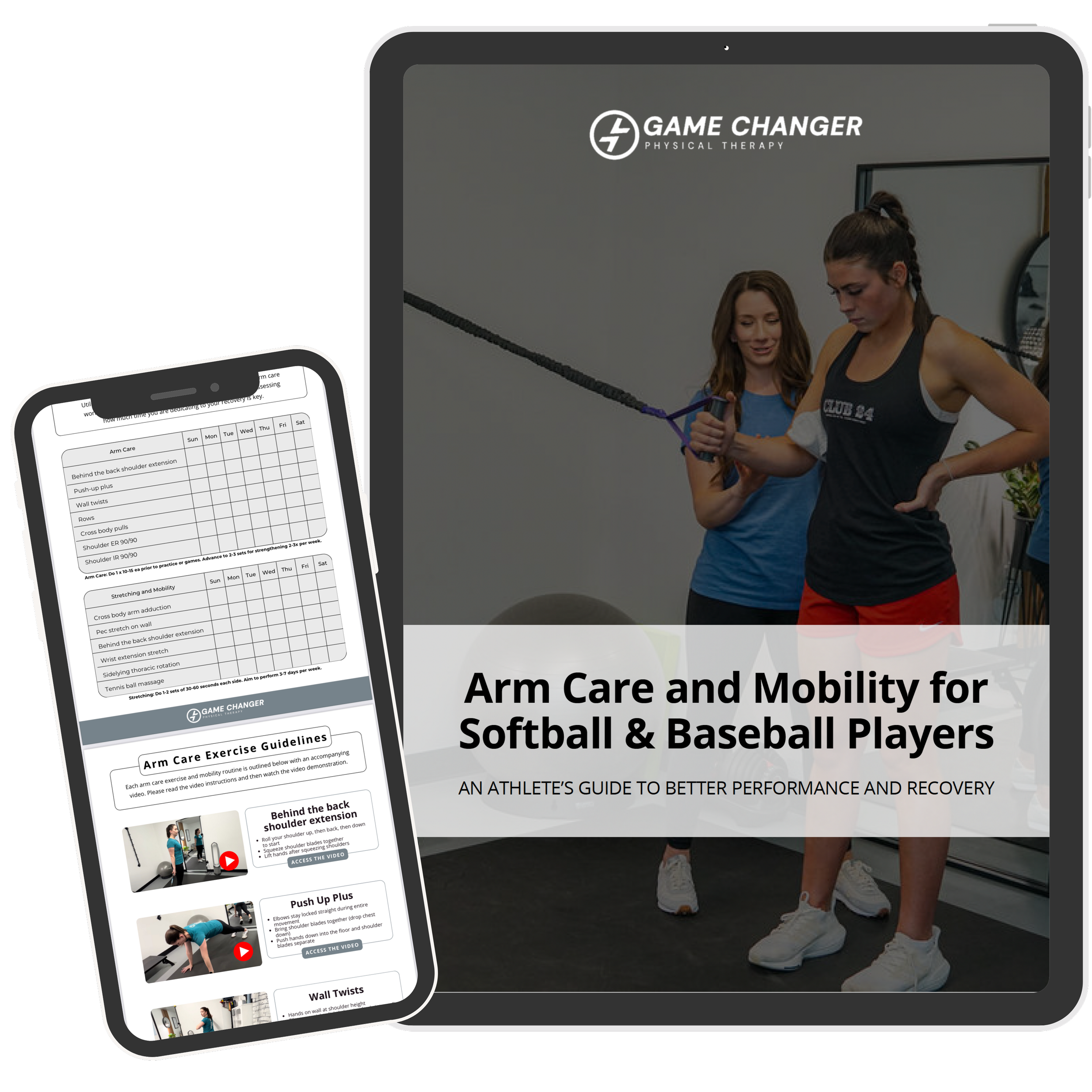
Get my FREE Arm Care Guide for Baseball and Softball Players
Keep Your Arm Game Strong ⚾️🥎
The Athlete’s Guide to Better Performance & Recovery
Tired of sore shoulders, tight elbows, or fatigue dragging down your game?
This free guide gives baseball and softball players the exact arm care and mobility routine you need to:
Prevent injuries before they happen
Improve throwing speed & accuracy
Recover faster between practices and gamesBuild endurance and consistency all season long
Follow along with step-by-step video demos
Download the FREE Arm Care Guide Now!
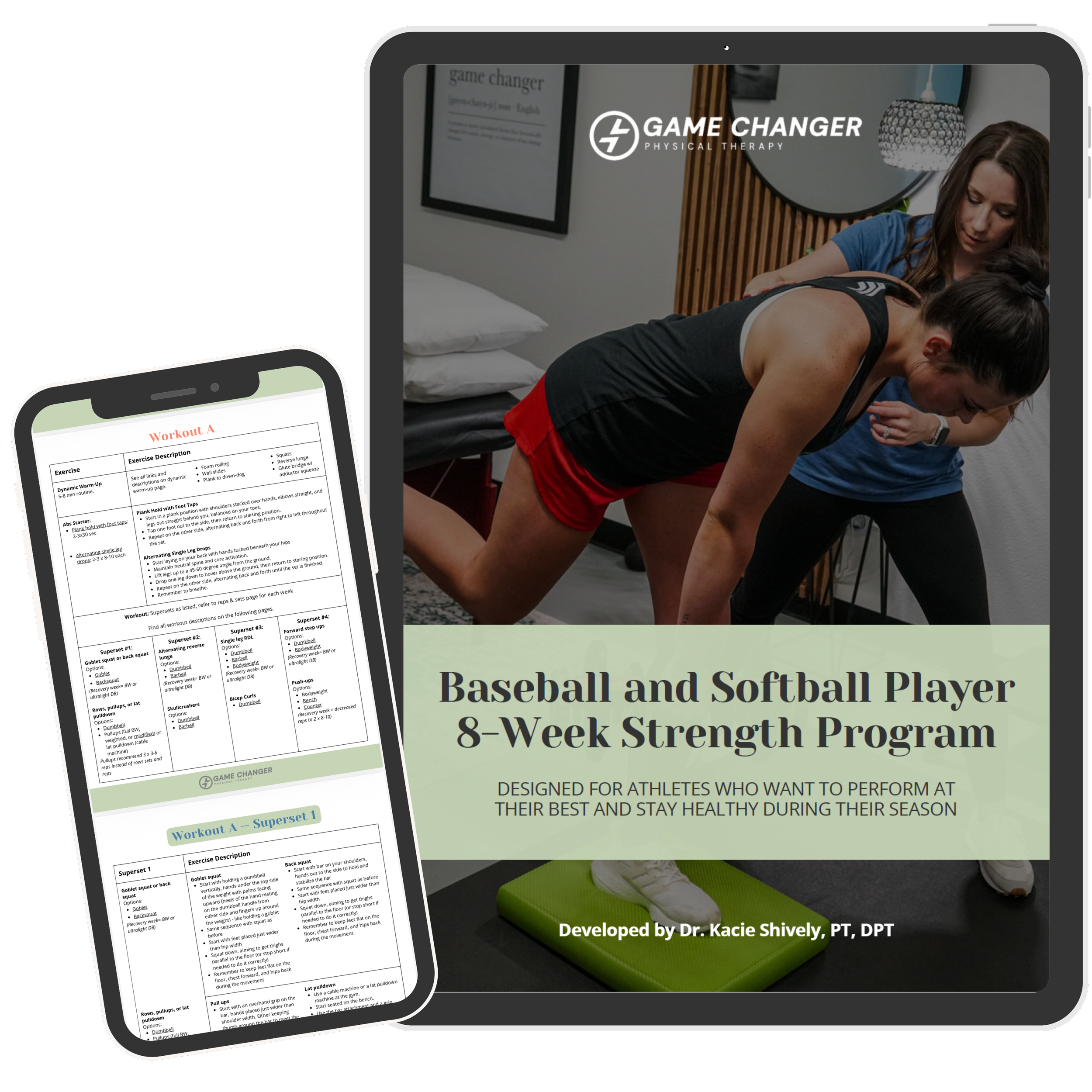
Want a Strength Plan Built for Throwing Athletes?
My 8-Week Strength Program for Baseball and Softball Athletes is a ready-to-follow plan. It builds rotational power and shoulder and hip stability, and it helps you stay durable through a long, repetitive season. There's no guesswork and no adapting a generic gym plan. You just show up and do the workout.
What's included:
3 full-body strength workouts per week (45–55 minutes), at home or in the gym
Built-in progressions and modifications so it meets you where you're at
Written and video tutorials for every exercise
Bonus foam rolling, mobility, and quick 15–20 minute strength routines